Picking an installment loan in Slovakia gets stressful fast. Ads throw numbers at you, banks smile and nod, and you walk out wondering if you just signed something fair.
A monthly payment loan splits your debt into fixed installments over a set period, usually several months up to five years for personal loans. Slovakia’s market has both traditional banks and digital lenders competing for your application.



The problem is most Slovaks focus on one number: the monthly installment. That single figure hides a lot.
Lenders licensed and supervised in Slovakia must follow consumer credit rules set by the Slovak National Bank, so at least you have legal ground to stand on when things go sideways.
Slovak Monthly Installment Loans: What Type Fits Your Situation?
Slovakia’s loan market is not one-size-fits-all, and the category you pick matters more than the lender you pick. Getting that backwards is one of the more expensive mistakes a borrower can make.
Personal Installment Loans (Unsecured)
Unsecured personal loans require no collateral. Banks like Slovenská sporiteľňa, Tatra banka, and VÚB bank all offer them, as do several fintech platforms.
Repayment periods run from a few months up to five years, and eligibility depends heavily on your credit history and documented income.
These loans work well for consolidating older debts, paying for renovations, or covering medical costs that appeared without warning. What they do not work well for: borrowing more than your budget can absorb.
Because there is no property backing the loan, lenders compensate with stricter credit checks or higher rates for riskier profiles.
Point-of-Sale Financing at Slovak Retailers
Point-of-sale (PoS) financing lets you walk into a store, pick up electronics or furniture, and pay for it in installments through a third-party lender partnered with the retailer. Approval at checkout feels effortless. That ease is worth a second look.
Promotional 0% interest periods are common in PoS deals. Read the contract carefully, because the rate that kicks in after the promo window closes can be steep. Missing that transition date has cost Slovak consumers more than they bargained for.
Auto Loans and Home-Secured Credit
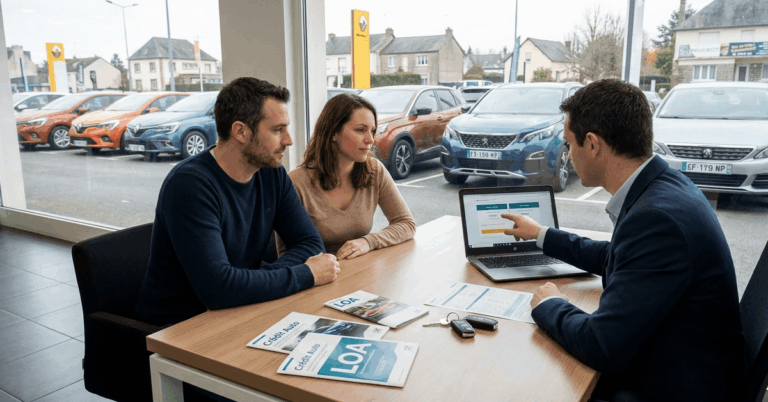
Auto loans through dealerships typically carry longer repayment periods and may require a down payment. Rates can be fixed or variable.
For larger amounts, home equity loans use your property as security and usually offer more competitive rates than unsecured products.
Mortgages extend this further, spreading property payments over decades. Both home-secured products involve serious legal documentation and stricter qualification steps.
Who Can Actually Get Approved for an Installment Loan in Slovakia?
Lenders require applicants to be at least 18 years old and resident in Slovakia. A steady, documentable income is non-negotiable at most institutions.
What counts as acceptable income varies: salaried employment is the easiest to verify, but some lenders will consider freelance or self-employed income with the right paperwork.
Credit history is where applications succeed or fail. Some online platforms will approve borrowers with imperfect credit records, but they charge significantly higher annual percentage rates to offset that risk. That tradeoff is worth calculating before applying.
Online platforms have cut application time considerably. Many allow digital submission of ID, proof of address, and income statements, with funds potentially transferred within a few business days. Traditional banks may still require a branch visit.
The Cost Breakdown Lenders Hope You Skip
A monthly payment number means almost nothing without the full picture. These are the figures worth comparing across every lender:
- Annual Percentage Rate (APR): The annualized rate that includes mandatory fees, not just interest. This is the most honest cost comparison point.
- Loan term: A longer term lowers the monthly payment but raises the total cost paid.
- Total repayable amount: Add up every payment. Some online repayment calculators let you model this, though they may omit minor charges buried in the contract.
- Early repayment terms: Some Slovak lenders charge a fee for paying off a loan ahead of schedule. Others allow free prepayment. Ask before signing.
- Late payment penalties: One missed payment can trigger fees that add real cost to the loan. Check the exact amount.
| Loan Type | Typical Term | Collateral Required | APR Range |
|---|---|---|---|
| Personal Installment | 6 months to 5 years | No | Varies by credit profile |
| PoS Financing | 3 to 24 months | No | 0% promo, then higher |
| Auto Loan | 1 to 7 years | Vehicle | Fixed or variable |
| Home Equity Loan | 5 to 20 years | Property | Generally lower |
The table above covers the main loan categories, but actual APRs vary widely by lender and applicant profile.
The Slovak National Bank’s consumer lending section publishes borrower rights and rate cap information that every applicant should read before committing.
Slovak Borrower Rights Are Stronger Than You Might Think
Slovak law requires credit agreements to be written documents with all terms stated transparently. A lender cannot hide fees in vague contract language and call it compliant.
Borrowers have a 14-day withdrawal window after signing, allowing them to cancel without penalty except for any interest that accrued during that period.
There is also a legal cap on maximum annual percentage rates for consumer loans. If a lender quotes something that feels extreme, the Slovak National Bank is the authority to contact.
I think most borrowers in Slovakia underuse that 14-day window. If a loan felt rushed at signing, that two-week period is a second chance to re-read the contract with a clear head.
Managing an Installment Loan Without Wrecking Your Budget
Taking on a monthly payment commitment changes your cash flow for the entire loan term. Set payment reminders or enable automatic transfers from the start. Late fees are avoidable, and every one of them was preventable.
Keep documentation for each stage of the loan: application confirmation, disbursement records, and every payment receipt. Disputes between borrowers and lenders happen, and having your own paper trail is easier than relying on the lender’s records.
These habits help keep installment loans manageable over time:
- Review your monthly budget before applying to confirm the payment fits without crowding out rent, utilities, or emergency savings.
- Ask your lender explicitly about the early repayment policy before signing anything.
- Set automatic bank transfers to avoid late charges on months when other expenses spike.
- Check the official lender website for updated terms, since promotional rates and conditions can change.
The Slovenská sporiteľňa personal loan page gives a working example of what a major Slovak bank communicates about installment loan terms.
My Contrarian Take on Comparing Slovak Loan Rates
Every financial guide tells you to shop around and pick the lowest rate.
I disagree with that as a starting point, specifically because the APR on Slovak personal loans varies so much by credit profile that the advertised rate rarely matches what a specific borrower will receive.
Applying to multiple lenders in quick succession can generate multiple hard credit inquiries that temporarily damage your score, making the next quote worse than it would have been.
A better sequence: check your credit report first, run pre-qualification where available (soft inquiry only), then apply to one lender that fits your profile rather than four lenders at once.
Questions People Ask About Monthly Payment Loans in Slovakia
Q: Can I get a monthly installment loan in Slovakia with bad credit? Some online lenders and PoS financing providers approve applicants with poor credit histories, but the APR offered to those borrowers is typically much higher than advertised rates. Review the total repayable amount, not just the monthly figure, before accepting any such offer.
Q: What is the maximum loan term for personal installment loans in Slovakia? Personal unsecured loans from major Slovak banks generally go up to five years. Secured products like home equity loans extend further, sometimes to 20 years or more, depending on the lender and the property value.
Q: Can I pay off a Slovak installment loan early? Some lenders allow free early repayment; others charge a prepayment fee. Slovak consumer lending law gives you the right to repay early, but the specific fee terms must be in your contract. Ask before signing, not after.
Q: What happens if I miss a monthly payment? Missed payments trigger late fees and can be reported to credit bureaus, affecting your credit profile. Repeated missed payments may result in the lender accelerating the full outstanding balance. Contact your lender before missing a payment if you anticipate cash flow issues.
Q: Are PoS installment deals in Slovakia regulated the same way as bank loans? PoS financing offered through retail partners is subject to the same Slovak consumer credit law as bank loans. The lender, not the retailer, holds the credit agreement, and all the same disclosure and withdrawal rights apply.
Conclusion
Taking on a monthly payment loan in Slovakia works best when you read the full contract, not just the monthly number.
Slovak law gives borrowers real protections, including a 14-day exit window, but those protections only help if you know they exist. The total repayable amount, not the monthly installment, is the figure that tells you what the loan actually costs.
Run those numbers carefully, and you will avoid the most common mistake Slovak borrowers make with installment credit.