Crédit Mutuel sits in the middle of everyday banking in France, so the Crédit Mutuel Credit Card question usually comes up in a practical moment: travel, online shopping, car rental, or tighter monthly budgeting.
Card choices cover Visa and Mastercard networks, then branch into debit timing, insurance add-ons, and mobile features that change how the card feels day to day. Details vary across local federations, so the smartest approach is to treat each offer as a framework, then confirm the pricing brochure tied to the specific caisse.



Most people end up deciding on two things first: the network and the debit mode. Those choices affect acceptance abroad, monthly cash flow, and even how deposits work for rentals.
Crédit Mutuel Credit Card Basics
Crédit Mutuel in France offers bank cards issued on the two big networks, with EMV chip security and broad merchant acceptance. The range usually includes entry and classic tiers, plus premium options that add stronger assistance, insurance, and travel services.
A separate track exists for younger customers, often built for ages 18 to 29, where pricing and features aim to match student life and early-career budgeting.
Security and servicing tend to follow mainstream French banking expectations:
- chip-and-PIN,
- online account controls, and
- The ability to block a card quickly when something looks wrong.
Fraud handling in France also benefits from national reporting and dispute pathways, so speed matters more than perfect paperwork when an issue appears.
Visa and Mastercard Options In France
Card selection usually starts with branding, but the useful differences show up in benefits, limits, and how the card is labeled for certain merchants.
Network Choice and Acceptance
Both networks are widely accepted in France and abroad, so the network alone rarely decides the experience.
Merchants that care about “credit” labeling, especially car rental agencies, often focus on the debit mode and wording printed on the card rather than the logo itself. That’s one reason Visa and Mastercard cards at Crédit Mutuel get marketed alongside debit timing options instead of network hype.
Tier and Lifestyle Fit
Entry tiers tend to focus on core payments and cash withdrawals with predictable pricing.
Premium tiers often bundle stronger travel assistance, insurance coverage, and higher limits, which can matter for frequent travelers or people who book hotels and rentals regularly.
Young adult offers commonly prioritize affordability and support services, with an emphasis on autonomy, budgeting tools, and mobility.
Debit Options: Débit Immédiat Vs Débit Différé
Debit timing decides how purchases hit the current account, and that changes cash flow more than any rewards pitch.
Débit Immédiat For Tight Day-To-Day Control
Choosing débit immédiat means each card purchase posts to the account quickly, often the same day or within a short processing window.
Budgeting stays simpler because the balance reflects spending in near real time. That helps when income timing is irregular or when avoiding overdraft fees matters more than payment flexibility.
Débit Différé For Monthly Smoothing
Picking débit différé shifts card purchases into a single monthly debit, while cash withdrawals typically remain immediate. Monthly consolidation can help when predictable salary cycles make end-of-month settlement easier.
Tracking still matters, since “encours” can rise quietly across the month, especially with subscriptions, travel bookings, and weekend spending.
Crédit Mutuel also publishes calendar-style guidance for deferred debit cutoff and debit dates, which reduces surprises once the system is understood. A short routine helps: check pending card totals mid-month, then top up the current account before the debit date lands.
Mobile and Contactless Payments
Card use in France increasingly means phone-first controls, then plastic as backup. Crédit Mutuel leans into that pattern through app-based management and tap-to-pay convenience.
Contactless Payments
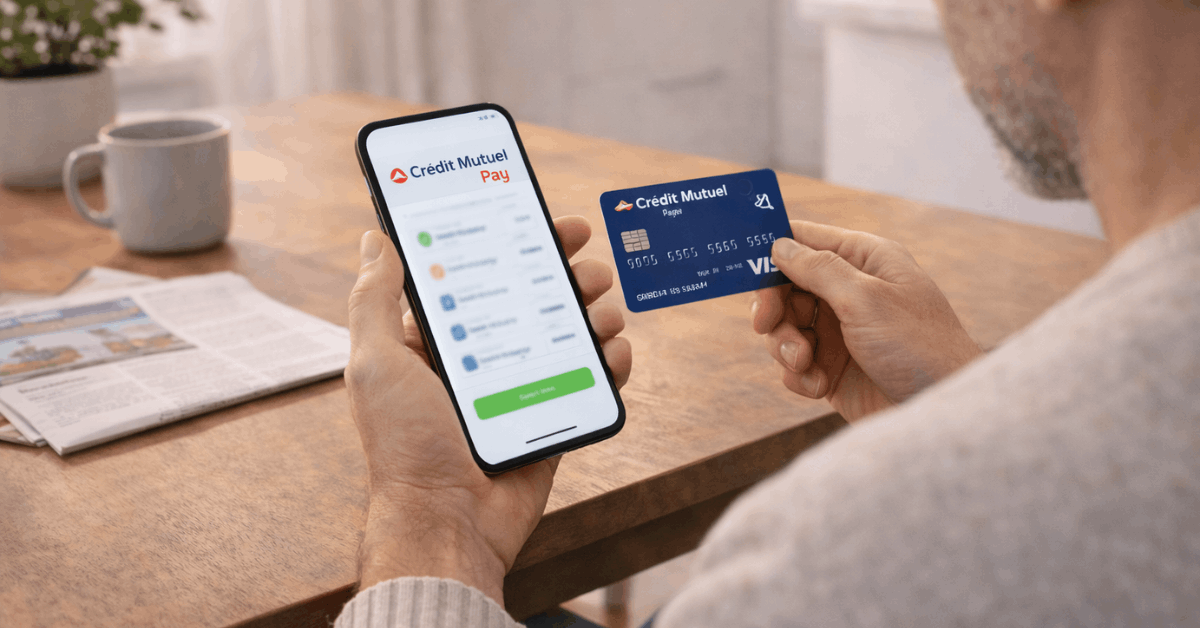
The mobile stack supports contactless payments through the physical card and through phone-based wallets. Crédit Mutuel’s own solution, the Crédit Mutuel Pay app, is positioned as a hub for mobile payments and related features, including the ability to store multiple cards for tap-to-pay use.
That multi-card setup can be helpful for households juggling a joint account card, a personal card, and a backup travel card.
Online Security
Practical security also improves when the app is used as the default control center. Card locking, transaction alerts, and quick access to emergency numbers reduce the damage window when a card is lost or compromised.
Fraud prevention still relies on habits: avoiding unknown payment links, reviewing transactions regularly, and acting quickly when a charge looks wrong.
Fees, Limits, and International Use
International use is where cost details matter, since bank card fees can stack in quiet ways across a trip.
International Functionality and Travel Blocks
Cards generally work worldwide, but travel patterns can trigger automated security checks.
Advisers often recommend notifying the bank before travel, especially outside the usual spending area, to reduce the chance of a block during the first foreign transactions. Another simple tactic helps: run a small purchase early in the trip, then check the app for alerts and authorization messages.
Foreign Withdrawals and Currency Costs
Cash withdrawals abroad can carry two layers of cost: the bank’s fee schedule and any local ATM surcharge. Foreign withdrawal fees at Crédit Mutuel can depend on the local federation and the specific card package, so checking the “brochure tarifaire” tied to the account matters.
Public examples reported for some regional pricing structures show a fixed fee plus a percentage for foreign-currency withdrawals, with higher percentages outside the EEA, and caps that limit the total charge per withdrawal.
Currency conversion can add another hidden cost if an exchange-rate margin applies. Dynamic currency conversion, where an ATM or merchant offers to charge in euros instead of local currency, often carries poor rates and should be approached carefully.
Insurance and Fraud Protection
Crédit Mutuel promotes card protection that covers fraudulent use following theft or loss, often packaged as Assur Carte insurance.
Coverage terms can include support for replacing stolen items and handling certain related losses, depending on the contract version. Insurance never replaces basic steps, though. Stop-payment actions, rapid reporting, and app-based card blocking remain the first move.
National guidance in France also points to official reporting and dispute pathways for payment card fraud, which can matter when a claim becomes time-sensitive. Documenting the timeline helps, but speed helps more.

How To Apply and Manage The Card
Card access usually ties to having an account with the bank, since debit cards connect directly to the current account structure in France.
Account opening often happens in person, especially when identity and address checks need original documents. Expect to bring ID, proof of address, and supporting details that match the account profile.
A simple setup routine keeps the card manageable once issued:
Enable transaction alerts in the mobile banking environment to spot anomalies quickly.
- Confirm debit mode settings and monthly cutoff dates when deferred debit applies.
- Save emergency card stop numbers and app access methods for travel scenarios.
- Review the local pricing brochure for cash withdrawals, foreign use, and package fees.
- Keep contact details updated so security checks don’t fail at the worst time.
Daily management tends to come down to two habits: checking transactions weekly and treating deferred debit totals like a bill that needs funding before the debit date.
Cooperative Model and Who The Card Suits
Crédit Mutuel is structured around a mutual model, which matters if membership and long-term relationship banking are part of the decision. Many customers can opt into cooperative bank membership, meaning the bank’s identity is tied to member participation rather than a typical shareholder-only structure.
That model often gets paired with messaging around trust, service continuity, and multi-generational products, including offers for younger adults and tailored support for seniors.
Your Card Choice Depends on Personal and Practical Usage
Card choice still stays personal and practical. Immediate debit tends to fit strict budgeting and simpler balance control. Deferred debit can fit salary-based planning and larger monthly swings, as long as spending tracking stays consistent.
Premium tiers can make sense for frequent travelers who benefit from stronger assistance and insurance, while basic tiers fit low-maintenance daily spending with fewer extras.
Final Thoughts
Crédit Mutuel credit cards work best when the decision stays grounded in two practical levers: debit timing and the exact fee brochure tied to the local caisse.
Visa versus Mastercard rarely changes daily life, while débit immédiat versus débit différé can reshape cash flow, rental deposits, and how “credit” gets interpreted abroad.
Add the app controls, contactless options, and the right insurance bundle, and the card becomes predictable instead of surprising. A quick final check of the brochure tarifaire and the federation-specific offer usually turns a generic card choice into a clean, low-friction setup.
Disclaimer
This site provides general information on credit cards and payment products, not financial, legal, or tax advice; always verify rates, fees, and terms with the issuing bank before applying.