If you travel often, the “right” card is the one that works at hotels, rentals, online checkouts, and ATMs without surprise exchange costs.
bunq positions its cards and accounts as an app-first setup designed for cross-border spending, multi-currency holding, and travel-related extras.


What you get for travel with bunq
bunq centers travel use around card acceptance, transparent FX conversion rules, and in-app controls rather than branches.
You can manage spending in the app, use cards abroad, and add travel-oriented features like travel insights and perks depending on your plan.
For cross-border life, bunq also supports international IBAN options and foreign currency accounts so you can receive and hold money in different ways.
The practical takeaway is that “travel card” at bunq is really a bundle of card type + FX rules + account setup, not a single standalone product.
Card options for travel spending
bunq offers multiple card types, including a debit card and a credit card option, with “metal” being a physical card material option on certain plans.
Useful for travel acceptance cases like hotel reservations and car rentals, while still positioning it as “without the risk of falling into debt.”
Plan level affects how many physical cards you can get, and bunq also offers digital credit cards for online purchases on higher tiers.
Before a trip, your main decision is whether you need the credit-card acceptance scenarios more than a pure debit flow linked directly to your balance.
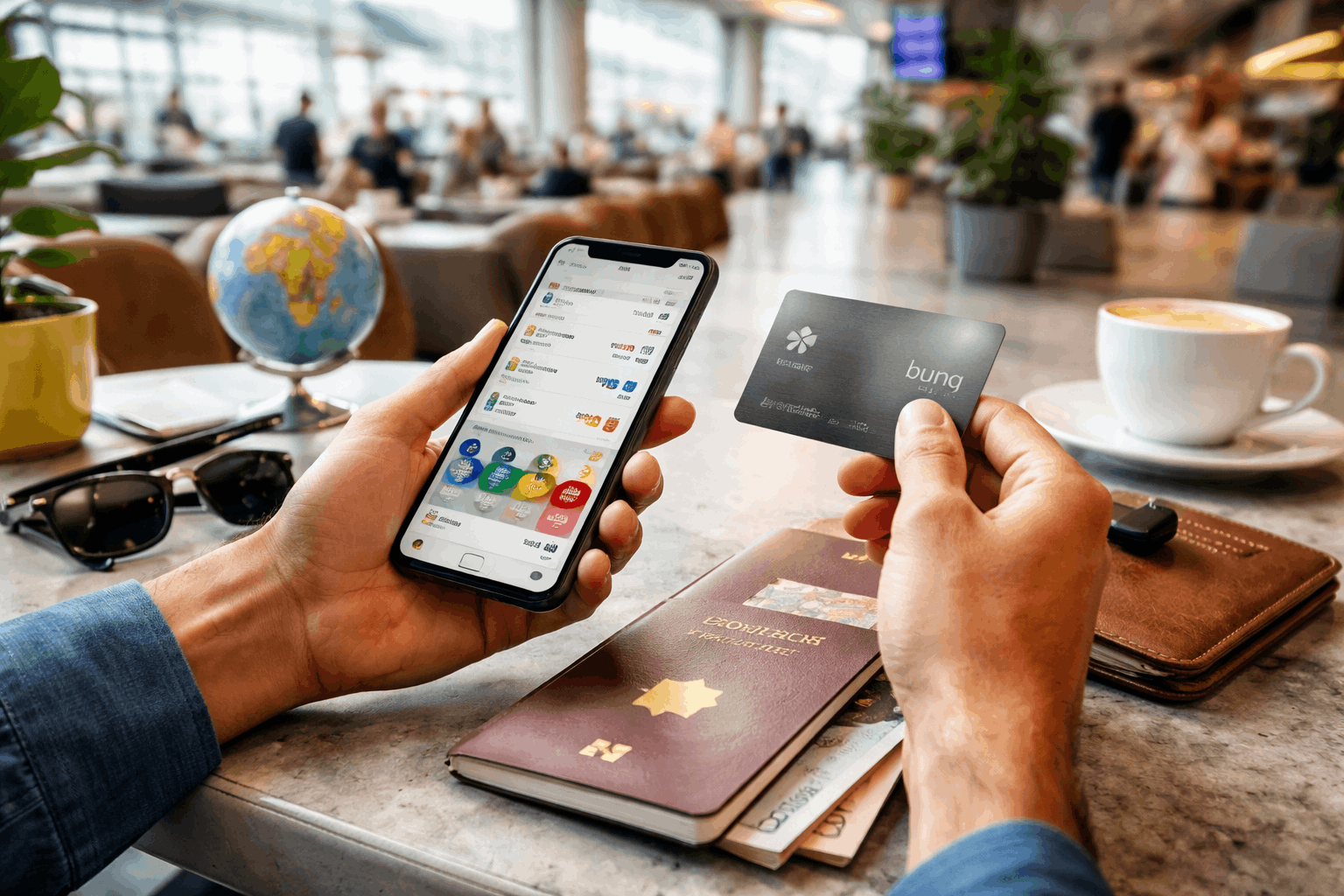
Debit vs credit vs metal in bunq terms
The Mastercard debit card is widely accepted and supports online purchases, which is useful for everyday travel spending.
The credit card is a strong fit for travel acceptance needs like rentals and hotels, which can be difficult with debit-only setups.
The “Metal” card is presented as a premium physical credit card option on certain plans, not a separate account type.
How many cards you can get on paid plans
bunq Core includes one physical card, while bunq Pro and bunq Elite include three physical cards.
bunq also describes creating digital credit cards for online shopping and budgeting, with higher limits on bunq Pro and bunq Elite.
If you travel with family or manage separate budgets, the “number of cards” detail matters as much as FX.
Accounts and IBANs for cross-border life
bunq offers international bank account options that let you choose an IBAN nationality from supported countries while still operating in euros.
This can help if you want a local-looking euro account for salary, bills, or transfers while you move between countries.
For travel planning, the key is that IBAN choice affects receiving and sending transfers, while your card experience depends more on acceptance and FX rules.
International Bank Accounts and IBAN options
International Bank Accounts provide IBANs based on foreign metrics and are intended to match the nationality you choose.
French, German, Irish, and Spanish IBAN creation is an option for verified users on certain tiers across the EEA.
In practice, you use this to simplify euro transfers and reduce friction when dealing with local payers who prefer a familiar IBAN format.
Adding extra bank accounts in the app
Choose your preferred IBAN and create the account from the Home tab, which is relevant if you want separate travel budgets.
If you keep “trip money” separate from “home bills,” multiple accounts can make your spending limits and alerts easier to interpret.
Spending abroad and currency exchange
bunq markets its travel FX approach as using the real Mastercard exchange rate with a stated adjustment rather than hidden conversion margins.
Use the real Mastercard exchange rate with a 0.5% adjustment to address currency fluctuations.
For travelers, that means your “true cost” abroad depends on when you spend, what currency you spend in, and whether you hold that currency already.
You should still check plan pricing and any relevant account fees, because FX is only one part of travel costs.
Travel perks that matter on the road
bunq promotes travel-oriented perks that go beyond payments, including travel insurance and eSIM options tied to certain plans.
Convenience items like staying connected and simplifying typical travel hassles through the app.
These perks can be valuable if you would otherwise buy them separately, but you should compare their plan cost against your actual travel frequency.
The best approach is to treat perks as “bonus value” after you confirm that card acceptance and FX costs already fit your needs.
Travel insurance on bunq plans
bunq lists “Travel Insurance” as an included benefit on bunq Elite’s plan page, which signals it is plan-dependent.
Highlights travel protection as part of its travel feature set, again tied to choosing the right plan.
If you already have travel insurance via another provider, you should compare coverage details before treating this as a reason to upgrade.
eSIM and staying connected abroad
You can install an eSIM directly from the bunq app and positions it as a way to reduce roaming costs.
eSIM benefits include free data amounts described as part of that tier’s offering.
If your trips are short and frequent, eSIM convenience can matter more than small FX differences.
Savings and interest rates you can earn
You can earn 2.01% annual interest.
A bonus-interest mechanic is tied to balance thresholds for the stated period, so you should read the conditions, not just the headline rate.
If you keep a travel buffer in your account year-round, even modest interest can offset part of your subscription cost, but only if you meet the requirements.
How to choose the right bunq setup for your trip
bunq’s plan structure matters because cards, perks, and limits differ by tier, so picking the plan is part of the travel decision.
If you mainly need acceptance for hotels and rentals, prioritize the credit card availability and the number of physical cards you can take with you.
If you mainly want low-friction spending abroad, prioritize ZeroFX rules, foreign currency options, and fast in-app control features.
The simplest decision flow is “acceptance first, FX second, perks last,” because the best perks do not help if your card fails at checkout.
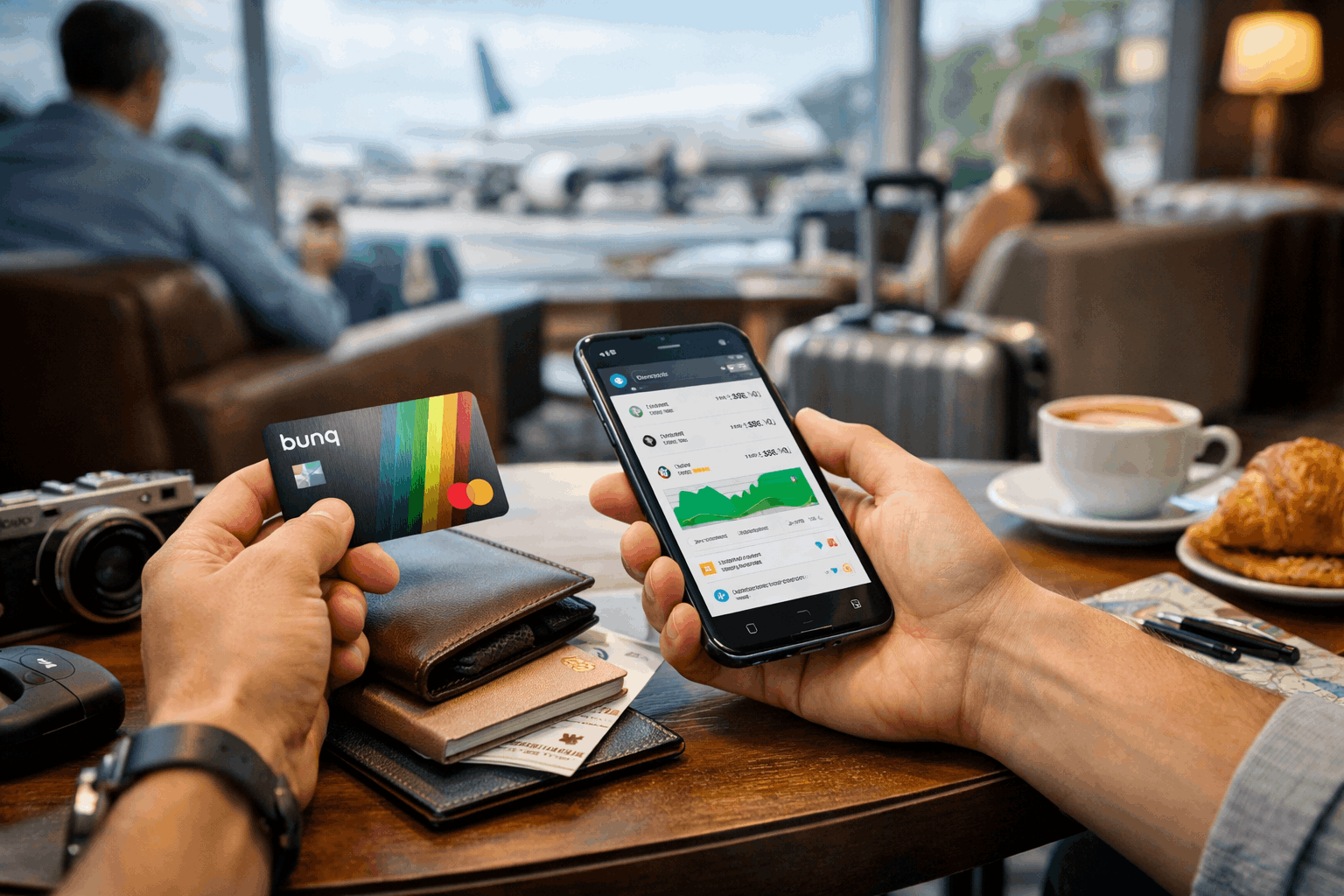
Official contact details for bunq
The address is Basisweg 32, 1043 AP Amsterdam, The Netherlands, and the support email [email protected].
Automated emergency phone line for urgent account or card issues: +31 20 808 3666.
bunq emphasizes support via encrypted in-app chat and email rather than standard phone support for general requests.
If you are traveling, save the emergency number before you leave and keep your app login and device security up to date.
Conclusion
bunq can work well for travel if you match the right card type to your needs and understand the published FX rules and currency conversion fees.
The most important checks are acceptance scenarios (hotels/rentals), the 0.5% ZeroFX adjustment, and whether foreign currency accounts fit your trip style.
If the plan perks you want (like eSIM or travel insurance) would replace costs you already have, the subscription can be easier to justify.
Disclaimer: Rates, fees, perks, and eligibility can change, so verify current terms directly in bunq’s app or official pages before you sign up or travel.