Home gardening and urban farming are practical skills that anyone can learn, regardless of the size of your space.
These methods help you grow your food, save money, and eat healthier.
Starting a course today gives you the tools and knowledge to begin with confidence.
Why Learn Home Gardening and Urban Farming?
Learning to grow your food gives you more control over what you eat and how it’s produced.
Whether you have a small balcony or a backyard, gardening, and farming skills are useful and rewarding.
- Save money by reducing grocery bills over time
- Eat healthier with fresh, pesticide-free produce
- Improve mental health through hands-on, calming activities
- Gain independence from unreliable food supply chains
- Help the environment by cutting down on food transport and packaging waste
- Develop a valuable skill you can use for life or even turn into income
What You’ll Learn in a Gardening or Farming Course
A good course teaches you the basics and helps you avoid beginner mistakes.
You’ll learn how to grow food efficiently, even with limited space or experience.
- How to choose the right plants for your space and climate
- Soil basics, including preparation, drainage, and fertilizing
- Watering techniques to avoid overwatering or drying out
- Sunlight and placement to ensure healthy plant growth
- Composting and natural fertilizers to improve soil quality
- Pest control using safe, organic methods
- Urban farming systems, like vertical gardens or hydroponics
- Seasonal planning for year-round harvests
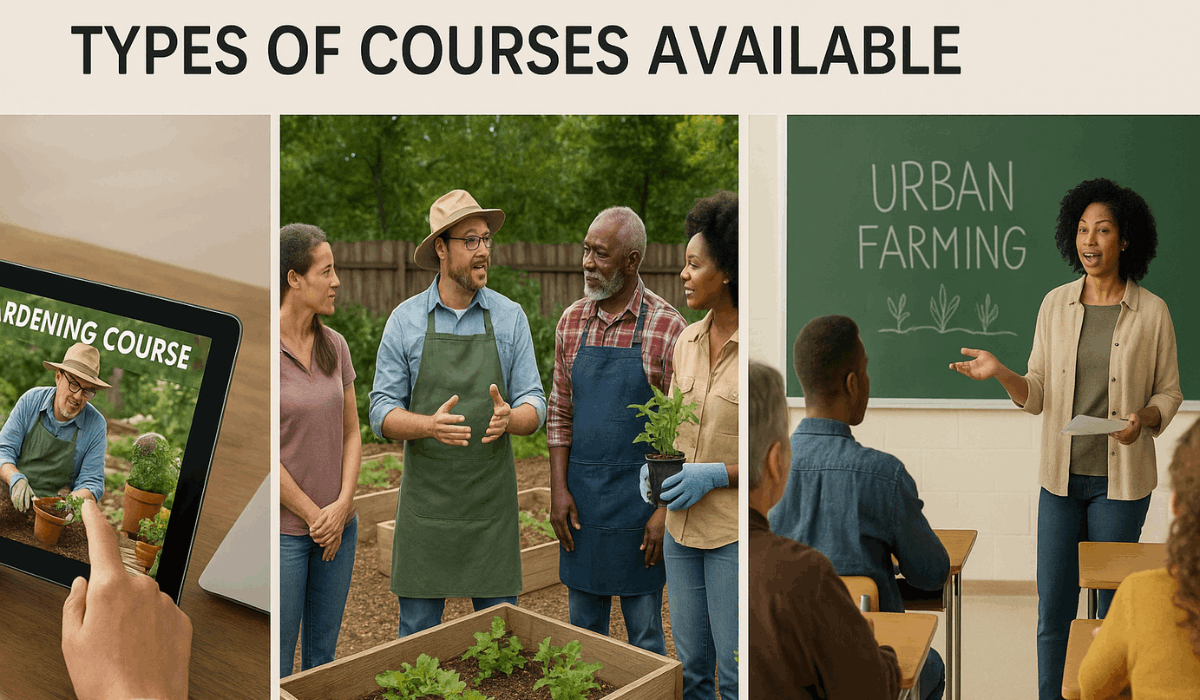
Types of Courses Available
You can choose from several types of home gardening and urban farming courses. Each one fits different goals, learning styles, and time availability.
Here are the main types of courses you can choose from:
Online Courses
Online courses let you learn from home using video lessons and digital guides. They’re ideal if you want flexibility and a self-paced format.
Examples include platforms like Udemy, Coursera, and Skillshare, which offer a variety of gardening and urban farming courses.
- Learn anytime, anywhere
- Includes videos, PDFs, and quizzes
- Can be free or paid
- Often beginner-friendly
In-Person Workshops
In-person workshops are hands-on classes that teach gardening or farming through direct experience. They work well if you prefer face-to-face learning.
- Held at farms, schools, or garden centers
- Live instructor guidance
- Usually done in small groups
- Often scheduled on weekends
Community Programs
Community programs are local gardening or urban farming classes offered by city offices or nonprofits.
- They’re perfect for learning while building connections.
- Often free or low-cost
- Taught by experienced volunteers or local experts
- May offer shared garden space
- Focus on sustainability and food access
Mobile App-Based Courses
Mobile app-based courses provide lessons, tips, and reminders directly through your phone. They’re great if you like learning in short sessions.
Popular options include Planter, Blossom, From Seed to Spoon, and Gardenize, each offering tools for plant care, garden planning, and progress tracking.
- Interactive design with progress tracking
- Offers plant care alerts and checklists
- Some include video lessons or expert chat
- Free and premium versions available
University Extension Programs
University extension programs are formal courses from agriculture departments or universities. These are best for those who want a more advanced or certified option.
- Taught by academic or industry professionals
- May include in-person labs or fieldwork
- Leads to a certificate
- Tuition or enrollment fees required
YouTube and Free Tutorials
YouTube and free tutorials are informal and easily accessible, making them ideal for learning specific tasks.
You can find step-by-step guidance from real gardeners.
Popular channels like Epic Gardening, CaliKim29, and MIGardener offer free videos on planting and composting.
- No registration needed
- Covers specific tasks like pruning or composting
- Easy to follow, but varies in quality
- Useful as a supplement to other courses
How to Choose the Right Course
Choosing the proper gardening or urban farming course depends on your goals, space, and experience level.
Focus on what fits your needs and how you prefer to learn.
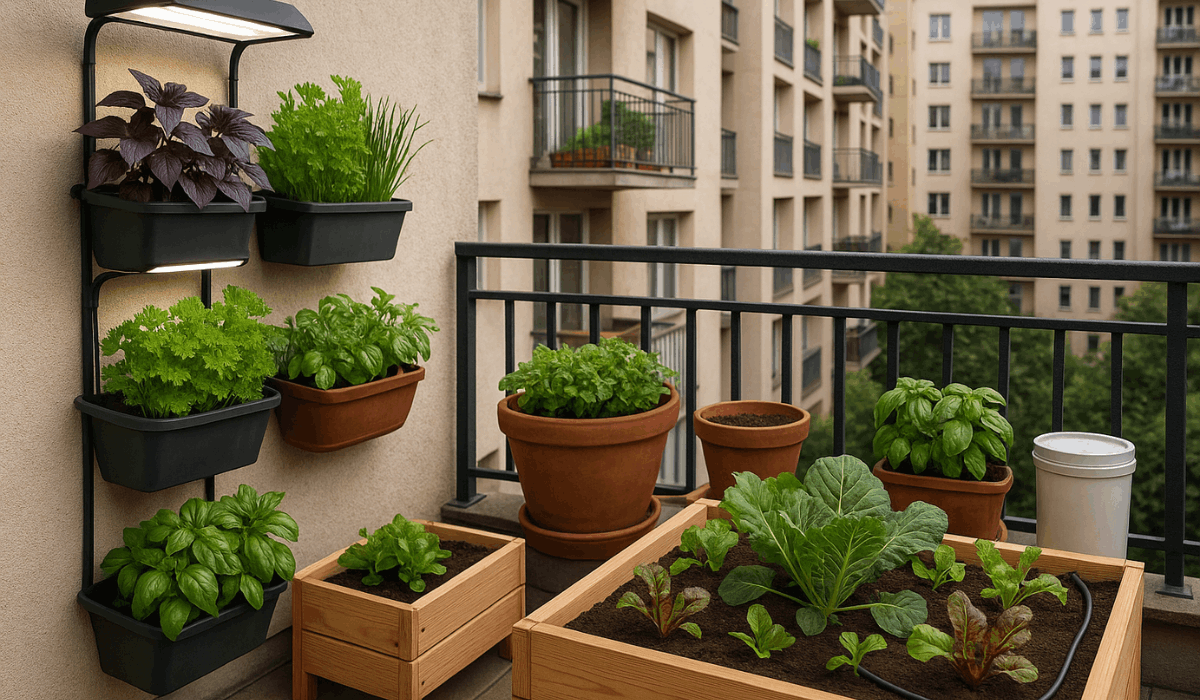
- Know your space – Choose a course that matches your setup: balcony, backyard, or indoor containers.
- Set your goal – Whether you want to grow herbs, start a full garden, or farm for profit, choose a course that aligns with your purpose.
- Check the course level – Ensure it’s suitable for beginners if you’re new to the subject.
- Review the content – Look for clear lessons on soil, watering, planting, and pest control.
- Read feedback – Check reviews or ratings from past students to assess the quality.
- Consider certification – Some courses offer certificates for those who want formal recognition or plan to teach or sell their produce.
Tools and Materials You’ll Need
Starting home gardening or urban farming doesn’t require expensive gear. With a few basic tools and the right materials, you can begin right away.
- Containers or pots – Ideal for growing in small spaces, such as balconies or windowsills.
- Quality soil or potting mix – Essential for healthy plant growth.
- Seeds or starter plants – Choose easy-to-grow options, such as lettuce, herbs, or tomatoes.
- Watering can or spray bottle – For regular and gentle watering.
- Hand tools – A small trowel, pruners, and gloves are enough for most beginners.
- Compost bin (optional) – Helps create natural fertilizer and reduce kitchen waste.
- Grow lights (optional) – Useful for indoor setups or areas with low sunlight.
Tips to Get the Most from Your Course
To make your gardening or urban farming course truly effective, you need to stay engaged and apply what you learn.
These simple habits will help you absorb more and see real progress.
- Follow each lesson actively – Watch, take notes, and ask questions when possible.
- Practice immediately – Apply new techniques at home to reinforce your learning.
- Start small – Focus on a few plants or one method before expanding.
- Track your progress – Use photos, journals, or apps to monitor growth and results.
- Join a community – Connect with other learners or gardeners for support and tips.
- Stay consistent – Make time regularly to care for your garden and review course content.
Common Mistakes Beginners Should Avoid
Starting a garden is simple, but small mistakes can slow your progress. Avoiding these common errors will help you get better results from the beginning.
- Overwatering or underwatering – Both can damage or kill plants.
- Planting too much at once – Start small to stay in control and learn faster.
- Using poor-quality soil – Low-quality soil leads to weak growth and increased pest infestations.
- Ignoring sunlight needs – Placing plants in the wrong spot can affect their health and yield.
- Skipping pest checks – Pests can spread quickly if not caught early.
- Not following instructions – Skipping course steps or guessing often leads to failure.
The Bottomline
Home gardening and urban farming are easy to start with the right course.
You’ll gain practical skills, grow your food, and make the most of your space.
Start your course today and take the first step toward a more self-sufficient lifestyle.