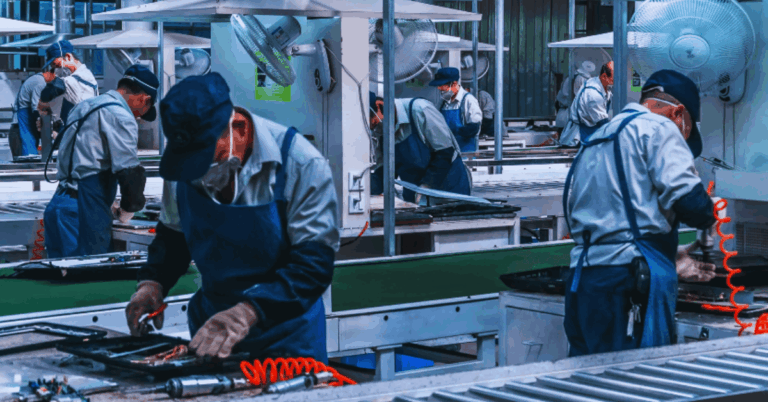
Europe had many operational factories, showing a steady demand for factory workers. This industry is vital to Europe’s economy, providing stability and attracting job seekers.
Factory jobs in Europe offer various opportunities for local and international workers. This guide outlines the steps to find and apply for these positions.
Factory roles in Europe allow workers to join a growing industry while benefiting job seekers. The approach below will help locate and secure factory positions.
Job Market Overview
Factory worker income varies based on expertise, company, and location. Over the next decade, jobs in factories are projected to grow at a slower pace than the national average.
Factory workers are essential for producing goods for a growing population and economy. However, advances in technology may reduce the need for some workers.
The average annual salary for a factory worker is €27,500, or around €13.22 per hour. The top 10% earn an annual salary of €60,500.
Factory Job Market in Europe
The factory job market in Europe offers positions across various industries. Identifying available jobs and key manufacturing areas will help focus your job search.
Types of Factory Workers
Factory workers can work in teams across different organizations and industries. Many individuals contribute to factory and production operations. Tailor your resume objective to the specific role you want. Here are several types of factory workers:
- Material Handler: Material handlers, or warehouse assistants, transport and store supplies. They load and unload products, track stock, and confirm deliveries meet required standards. These workers can be found in diverse sectors like retail, healthcare, and technology.
- Welder: Welders join materials using equipment, heat, and gas. They often work with metal to create parts and products for manufacturing processes, including stainless steel or aluminum.
- Line Technician: Line technicians work in specialized settings like auto parts repair. They manage motor and transmission repairs using applied sciences such as electronics and chemistry. Their tasks include maintaining motors, transmissions, steering, and other automotive systems.
- Electrician: Electricians integrate, maintain, and repair electrical systems in factories. They follow safety protocols and may handle tasks like rewiring, repairing power failures, and installing lighting.
- Sheet Metal Mechanic: Sheet metal mechanics fabricate and install sheet metal for industries like aviation. They shape materials into aerodynamic parts for vehicles and other hardware.
Key Areas for Factory Jobs in Europe
Factory jobs in Europe are concentrated in regions where major manufacturers operate.
- Electronics,
- automotive, and tech-related factories are prominent.
- Chemical,
- machinery, and
- food processing industries also provide many opportunities.
Requirements and Qualifications for Factory Jobs in Europe
Qualifications for factory jobs in Europe are generally straightforward. Advanced degrees are not always necessary, but certain skills are essential.
Educational Requirements for Factory Jobs in Europe:
- High School Diploma: Often sufficient for most entry-level factory roles.
- Vocational Training: Preferred for positions like machinists or equipment operators.
- Technical Degree: Helpful for jobs in electronics or robotics.
- Specialized Certifications: Required for high-skill roles like quality control.
Key Skills for Factory Jobs in Europe:
- Technical Skills: Understanding of machinery and factory processes is necessary.
- Basic Local Language: Useful, especially for safety and daily communication.
- Teamwork: Collaboration is common in factory environments.
- Attention to Detail: Ensures quality and reduces errors.
Training Programs and Certifications
Certifications and training can boost chances of landing factory jobs in Europe, particularly in technical roles.
Many factories provide on-the-job training, but certifications in machinery operation, safety compliance, robotics, and electronics can give a competitive advantage.
How to Apply for Factory Jobs in Europe
The application process for factory jobs in Europe involves preparing a tailored resume and securing the necessary visa. Follow these steps to ensure a smooth application process.
Step 1: Prepare Your Resume
Ensure your resume meets European standards:
- Personal Information: Include your name, address, and contact details.
- Education: List academic qualifications, starting with the most recent.
- Work Experience: Highlight relevant factory or technical roles.
- Skills & Certifications: Mention relevant skills, language proficiency, and factory-related training.
Step 2: Secure a Work Visa
A work visa is necessary for non-EU applicants. The required documents include:
- Work Visa Application: Apply through consulates or the Ministry of Foreign Affairs website.
- Valid Passport: Include photocopies and passport-size photos.
- Supporting Documents: Provide proof of employment, salary, contract details, academic qualifications, and company registration.
Step 3: Check Language Requirements
Language proficiency may be required, depending on the job and location. Basic knowledge of the local language is often needed, while advanced skills can open up better job opportunities.
Step 4: Apply Online
To apply online, follow the steps below:
- Find Job Listings: Use local job boards, recruitment websites, or company career pages to find available positions.
- Submit Application: Apply directly through the employer’s website or through online recruitment platforms.
- Follow Instructions: Ensure you submit all required documents and fill out all necessary fields to avoid delays.
Average Salary and Benefits for Factory Workers in Europe
Factory worker salaries in Europe vary based on skills, experience, job specifics, and work status. Regional minimum wage differences also influence pay rates.
Here’s an overview of average hourly rates in European factories:
- €9 to €11 per hour in most regions
- Larger cities offer closer to €12 per hour
- Smaller regions may range around €8 to €9 per hour
Full-time shifts typically last 8 hours, five to six days per week.
Benefits
Factory workers in Europe often receive benefits such as health insurance, transportation allowances, housing assistance, and paid leave for vacation and sick days. This applies to workers in various sectors across Europe.
Top Skills Needed for Factory Jobs in Europe
Here are the key skills for factory workers important in the global job market:
- Effective Communication: Clear instructions and collaboration are essential in fast-paced factory settings.
- Task Management: The ability to handle multiple duties efficiently is critical.
- Calm Under Pressure: Staying composed during high-stress periods is necessary.
- Physical Stamina: Many factory roles require physical endurance.
- Attention to Precision: Accuracy is crucial for production tasks.
- Independent Work: Being able to work with minimal supervision is highly valued.
- Reliability: Consistent attendance and dependable performance ensure smooth operations.
- Receptiveness to Feedback: Important for continuous improvement and growth.
- Team Collaboration: Working well with others boosts overall productivity.
- Workplace Relationships: A positive work environment contributes to long-term success.
In Europe, attendance and meeting local standards, including compliance with work entry requirements, are essential.
Responsibilities and Duties of a Factory Worker
Factory workers handle a range of duties depending on the role. Here are some common responsibilities:
- Assemble goods using power tools like drills.
- Operate equipment and gather items like furniture or vehicle parts.
- To ensure factory operations continue smoothly, perform upkeep tasks, such as cleaning machinery.
- Review schematics and technical drawings to ensure proper assembly.
- Adjust components between machines or repair broken equipment.
- Operate forklifts to move components within storage areas or docks for packing or unloading.
- Follow safety protocols to minimize risks of injury or damage.
- Inspect inbound raw materials to ensure they meet quality standards before use.
- Use computer-controlled machinery to cut materials like metal or plastic into the required shapes.
Conclusion
Factory jobs in Europe offer stable work and valuable benefits. Understanding salary expectations, the job market and the application process improves the chances of getting hired.
Tailoring resumes and preparing for interviews are key steps for workers to succeed in Europe’s factory job market.